
The evolution of vertical signs toward digital printing
Keywords:
Printing, Signs, Manufacturing, MethodsAbstract
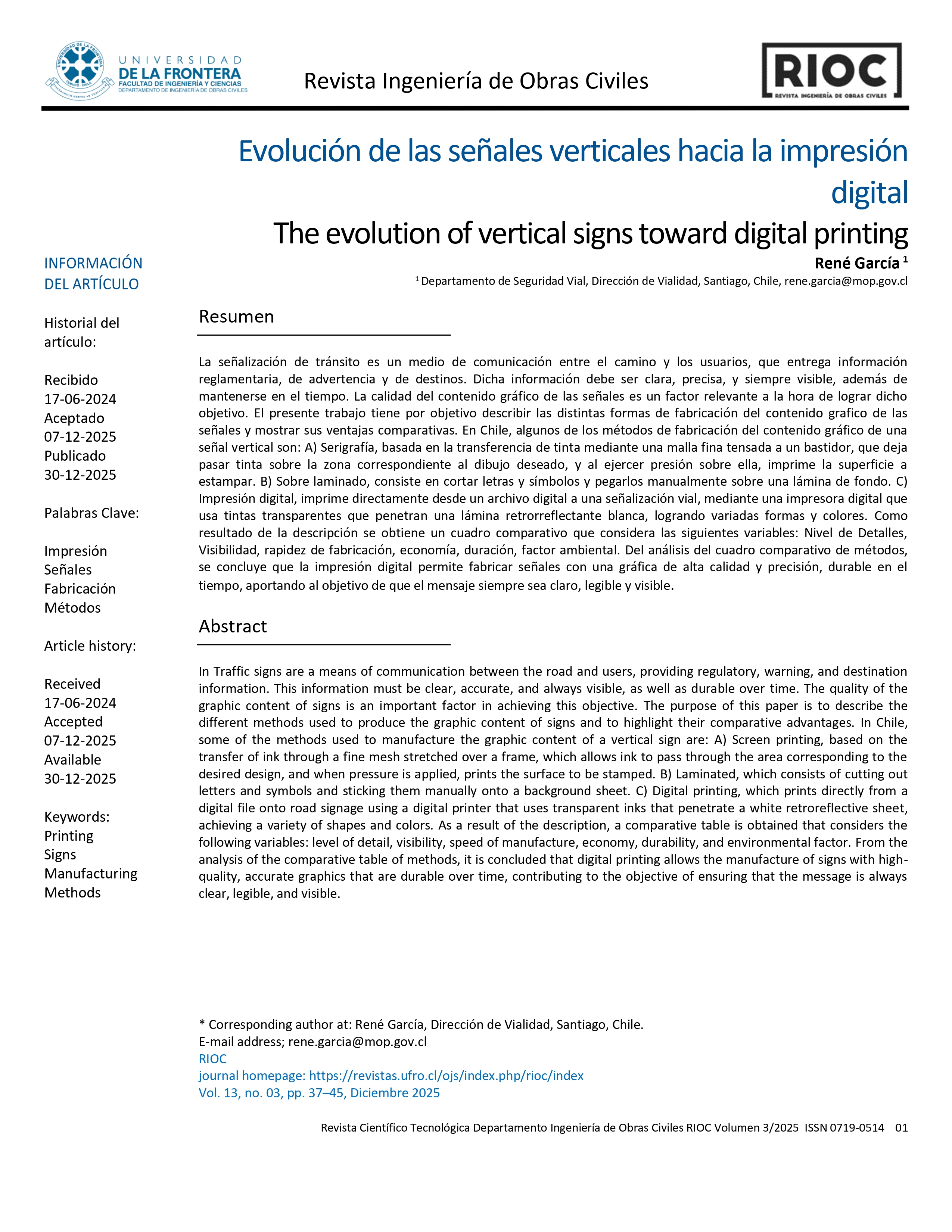
In Traffic signs are a means of communication between the road and users, providing regulatory, warning, and destination information. This information must be clear, accurate, and always visible, as well as durable over time. The quality of the graphic content of signs is an important factor in achieving this objective. The purpose of this paper is to describe the different methods used to produce the graphic content of signs and to highlight their comparative advantages. In Chile, some of the methods used to manufacture the graphic content of a vertical sign are: A) Screen printing, based on the transfer of ink through a fine mesh stretched over a frame, which allows ink to pass through the area corresponding to the desired design, and when pressure is applied, prints the surface to be stamped. B) Laminated, which consists of cutting out letters and symbols and sticking them manually onto a background sheet. C) Digital printing, which prints directly from a digital file onto road signage using a digital printer that uses transparent inks that penetrate a white retroreflective sheet, achieving a variety of shapes and colors. As a result of the description, a comparative table is obtained that considers the following variables: level of detail, visibility, speed of manufacture, economy, durability, and environmental factor. From the analysis of the comparative table of methods, it is concluded that digital printing allows the manufacture of signs with high-quality, accurate graphics that are durable over time, contributing to the objective of ensuring that the message is always clear, legible, and visible.
Downloads
Downloads
Published
How to Cite
Issue
Section
License
Copyright (c) 2026 René García

This work is licensed under a Creative Commons Attribution 4.0 International License.
The authors who publish in this journal accept the following conditions:
- The authors retain the copyright and assign to the magazine the right of the first publication, with the work registered with the Creative Commons attribution license, which allows third parties to use the published information whenever they mention the authorship of the work and the First publication in this journal.
- Authors may make other independent and additional contractual arrangements for non-exclusive distribution of the version of the article published in this journal (eg, include it in an institutional repository or publish it in a book) as long as it clearly indicates that the work Was first published in this magazine.
- Authors are encouraged and encouraged to publish their work on the Internet (for example, on institutional or personal pages) before and during the review and publication process, as it can lead to productive exchanges and a greater and faster dissemination of work Published (see The Effect of Open Access).